
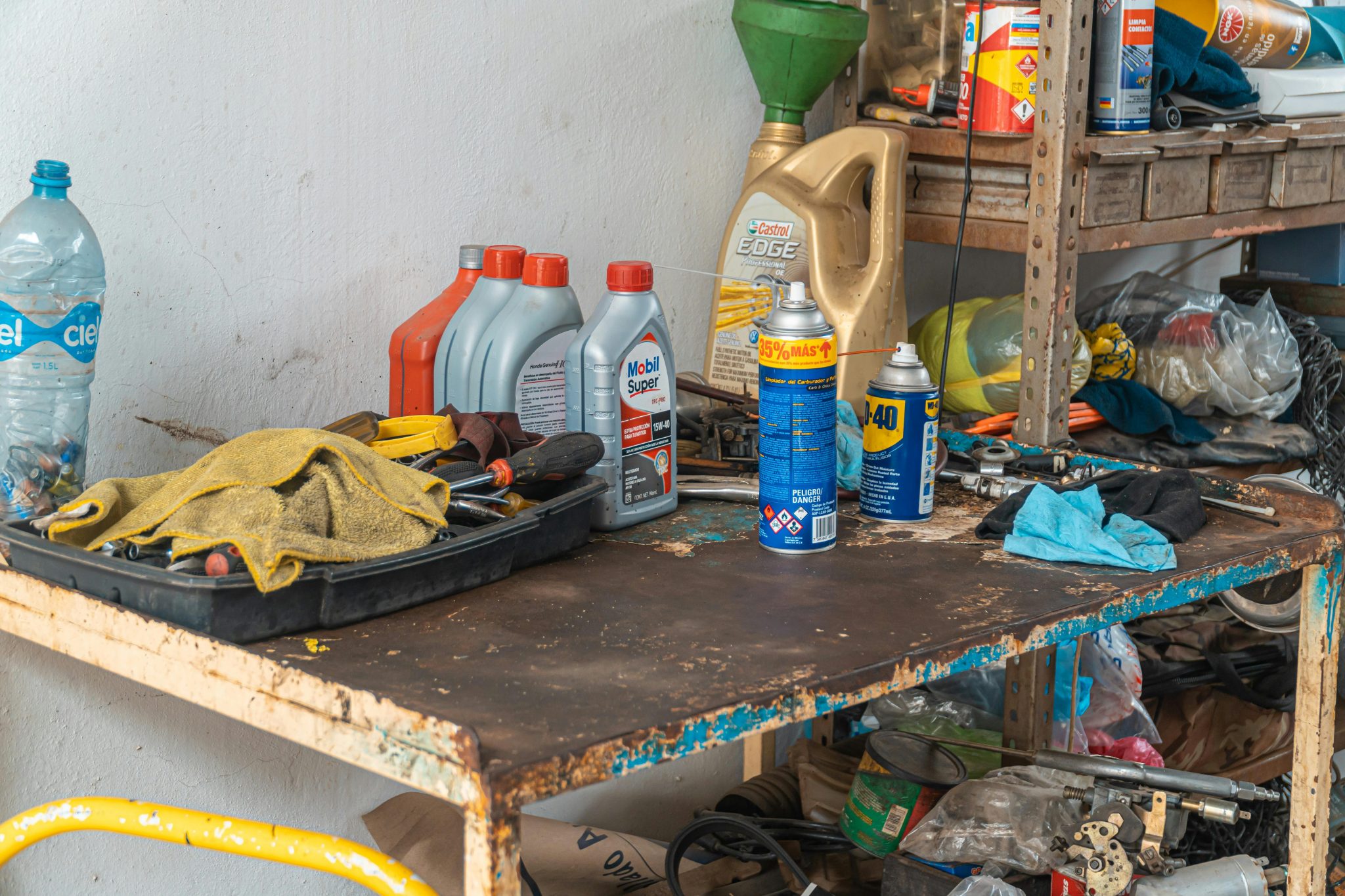
Spring is the time for cleaning. While nature wakes up and the sun is warm, more and more people are tidying up their surroundings – cleaning their pantries, garages and other dark corners of their homes. But opening the door often reveals them to be repositories of not only forgotten items but also hazardous waste. Old paint buckets, lubricants, battery filters, chemical cleaning products – all of these can pose a risk to both the environment and people’s health if they are not handled properly.
Municipal waste containers are no place for hazardous waste
Specialists of Kaunas Regional Waste Management Centre (hereinafter – Kaunas RWMC) remind that it is forbidden to throw hazardous waste into municipal waste containers. And while it may seem that a single battery or an old bucket of dried-up paint will not do any harm, in fact, even small amounts of hazardous waste in the general waste stream can have a much greater impact than it seems at first sight.
Laurynas Virbickas, Director of Kaunas RATC, says that even a small amount of hazardous waste with hazardous substances in the mixed municipal waste stream can have serious consequences – it can react with other substances, emit harmful gases, contaminate other waste, hindering further processing or even cause fires.
Many people do not realise, or even know, that hazardous, construction or bulky waste thrown into household waste bins, which should not be part of the mixed municipal waste stream, goes together with other waste to mechanical biological treatment (MBT) facilities, where the whole mixed waste stream is shredded to make it easier for processing and to separate out materials suitable for recycling. Unsuitable waste entering there not only contaminates the whole stream, but can also damage equipment during the shredding process, causing mechanical failure, fire and stoppage of the working process. Compressed air containers such as aerosol cans, paint or gas bottles, as well as batteries and e-cigarettes pose an even greater risk and can explode when subjected to pressure or impact. According to Kaunas RATC specialists, such cases are not so rare – they pose a risk to the safety of workers and cause fires.
Abandoned waste storage sites – potentially dangerous
Paints, varnishes, lubricants, cleaning chemicals and their residues, car care products, battery filters and batteries are all hazardous wastes that accumulate over time and are forgotten but remain potentially dangerous.
Renata Utyrienė, an ecologist at Kaunas RATC, points out that hazardous waste stored in inappropriate conditions not only does not lose its hazardousness, but in some cases becomes even more dangerous: “In the heat, old paint or varnish packaging can emit harmful vapours, compressed air packaging can explode and cause a real risk of fire, chemicals frozen in the cold can deform and explode, and, for example, batteries that have started to rust due to humidity can release acids.” – says Utyrienė. She urges people not to overestimate the value of “temporary” storage of such items in garages or storerooms – to stop hoarding them for years and not wait until they start to pose a threat to health or the environment, but to take care of them in a responsible and timely manner, either by handing them over to hazardous waste handlers or by delivering them free of charge to bulky waste sites.
Hazardous waste sorting guide – practical management advice for residents
One of the most important steps in the hazardous waste management process is to identify hazardous waste and know how to manage it properly. To this end, Kaunas RATC has prepared a ” Guide to sortinghousehold hazardous waste”, which helps residents to quickly and clearly understand what hazardous waste is, describing its types, labelling, hazardousness, specific examples of products containing hazardous substances found in households, and recommendations for management.


Garages and warehouses are a common place where hazardous waste accumulates. They often contain old lubricants, coolants, paint residues, aerosols, cleaning products, filters, batteries or even chemicals left without packaging. Some of these may be unusable or dangerously altered, but are still being stored because it is not known what to do with them. The sorting guide not only helps you to identify such waste, but also provides valuable guidance on how to manage it. More information: https://www.kaunoratc.lt/paslaugos/gyventojams/
Kaunas RATC specialists point out that hazardous waste can be delivered free of charge to bulky waste collection sites. “The most important thing is not to delay. Waste should not be stored in storerooms or garages for years. The earlier they are handed over to the waste handlers, the lower the risk to the environment and health,” says L. Virbickas, Director of Kaunas RATC, informing that there are 14 sites in the Kaunas region that accept a wide range of household hazardous waste, from paint residues to old batteries. One resident can deliver up to 50 kg of such waste per year free of charge (batteries and accumulators – unlimited). For more information on the opening times of the sites: https://www.kaunoratc.lt/paslaugos/gyventojams/
Kaunas RATC information