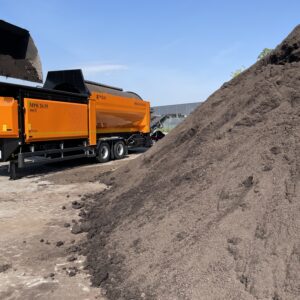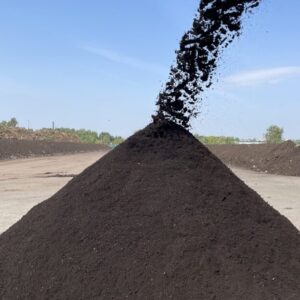
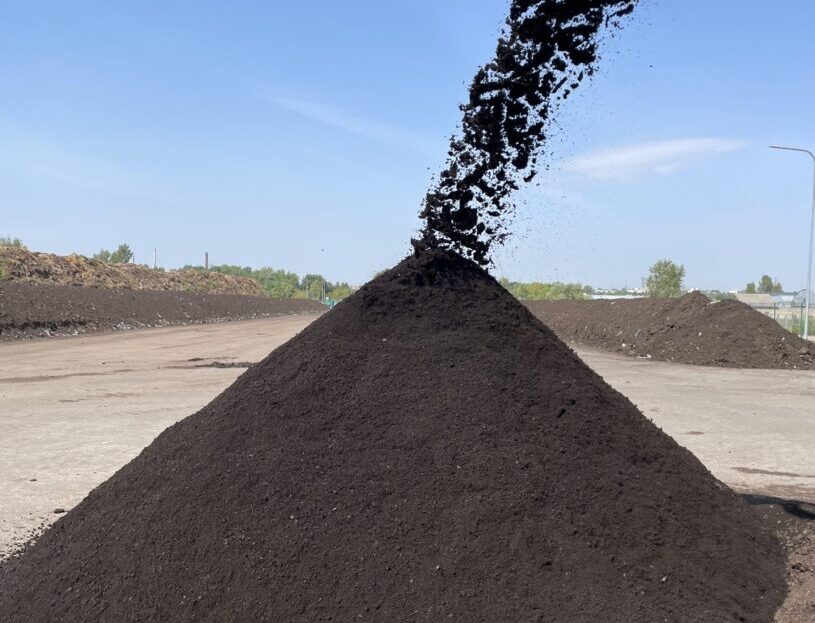
Although compost is mostly used in spring, experts stress that it is just as necessary in autumn. Autumn is one of the most important times to look after soil quality. Soil enriched with compost before winter builds up nutrient reserves, maintains its structure and better withstands the effects of frost, making it more vigorous and fertile in spring.
Compost in spring and autumn – different benefits for soil
The effects of compost in spring are immediate and obvious – it helps the seedlings to establish and gives the soil the looseness and nutrients it needs. Compost added in autumn has a different effect: it preserves nutrients over the winter and improves soil structure.
“During the cold season, the micro-organisms in the compost slow down, but they don’t stop – they continue to slowly break down organic matter. During this time, the compost acts as a storehouse: it preserves nutrients that are not washed away as quickly. So in spring, plants have a ready reserve.” – says Renata Utyrienė, an ecologist at Kaunas RATC. As soon as the weather warms up, they find a viable base for growth and the soil becomes richer and more resilient.
Another important function of compost is protective. A layer of compost spread on the soil surface helps maintain a more stable temperature and reduces the depth of frost, protecting roots from sudden frosts. “Compost also reduces soil erosion and, in the longer term, turns organic matter into humus. The carbon stored in the compost remains in the soil for a long time, which not only improves soil structure and fertility, but also helps to reduce the release of carbon dioxide into the atmosphere. – explains the benefits of using compost during the cold season.
Kaunas RATC compost – for everyone who takes care of their garden or kitchen garden
If you want to ensure soil fertility, you should not forget about quality compost. Each batch of compost produced at the Kaunas RATC green waste site undergoes special quality tests to ensure that it is safe and suitable for use in gardens, flowerbeds and lawns. The results of the tests confirm that Kaunas RATC compost is rich in nitrogen, phosphorus, potassium and other trace elements that are essential for plants, so it not only enriches the soil, but also helps to maintain its long-term fertility.
Kaunas RATC compost is available to both residents and businesses. The price per tonne is EUR 12 excluding VAT, but payment at the green waste composting site in Kaunas is only possible with a bank card, while in Kėdainiai district (Zabieliškis village) it is also possible in cash. Compost is sold loose, so you need to make sure you have the right transport or trailer. It is recommended that you call the site before you arrive to check whether there is enough compost available at the time. Larger quantities of compost are loaded by the site operators, so it is advisable to arrange a convenient loading time in advance.
Compost is sold at the following Kaunas RATC green waste composting sites:
Kaunas – Nemajūnų g.15A
Tel. +370 683 03786
Opening hours:
I: 9-18
II-V: 9-19
VI: 9-16
Lunch break: 13-13:45
VII: closed
Kėdainiai r. – Liepų g. 16, Zabieliškis k.
Tel. +370 682 55785
Opening hours:
I-VII: 8-16