
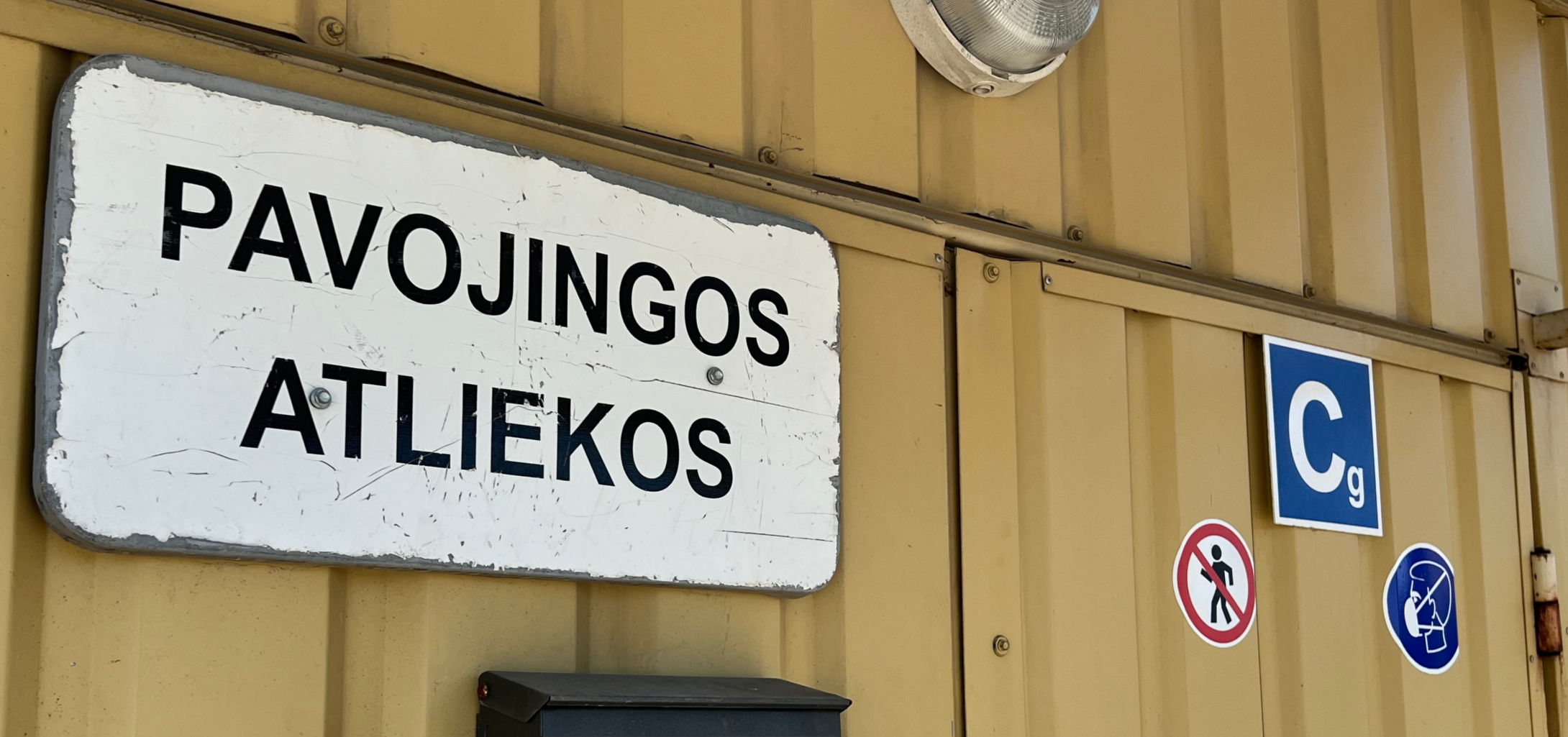
The data of Kaunas Regional Waste Management Centre (hereinafter – Kaunas RWMC) reveals an encouraging trend – in 2025, the largest ever amount of hazardous waste will be collected in bulky waste sites. This change can be attributed not only to the increased public awareness of the risks of hazardous waste, but also to the consistent education and clearer guidelines for the public how to identify and manage the hazardous waste they generate in their homes.
Growing hazardous waste streams are an indicator, not a problem
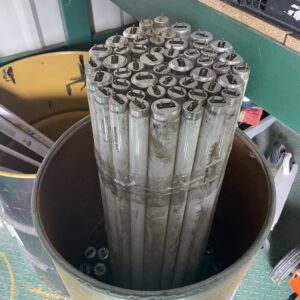
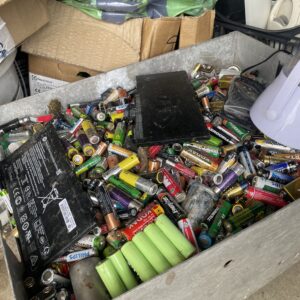
Rising collection rates do not automatically mean more hazardous waste is being generated in households. On the contrary, it shows that they are increasingly being separated and kept out of general waste containers. Improperly discarded batteries, aerosols, e-cigarettes, paint residues or other household chemicals are becoming a risk factor in the waste management chain, with irreversible consequences for the environment and fires in waste management facilities.
According to the data of Kaunas RATC, 1 965 tonnes of hazardous waste will be collected in Kaunas region in 2025. Compared to 2023 them increased by almost a third.
As in many regions of Lithuania, in Kaunas region household hazardous waste is collected from residents at collection sites are accepted free of charge, subject to the quantity accepted limit per inhabitant per year.
“The limit is set to be sufficient for a typical household. It allows residents to transfer hazardous waste free of charge while protecting the system from commercial flows and ensuring its financial sustainability. However, enabling conditions are only part of the solution – awareness and education – the ability to recognise hazardous waste and know how to sort it – remains equally important.” – notes Laurynas Virbickas, Director of Kaunas RATC.
Awareness is growing – even the smallest amounts reach the sites
It is not only the statistics that show the change, but also the day-to-day experience of workers at the collection sites.
Operators of waste collection sites in Kaunas region notice that the awareness of the population is growing along with the increasing waste streams.
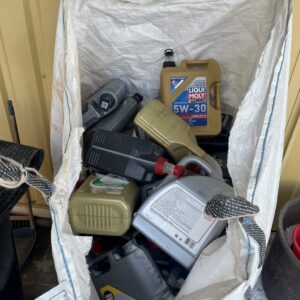
“We are seeing more and more people bringing even very small amounts – one litre of lubricant, a few empty oil cans, a few batteries or an old thermometer. Even if the quantity is minimal, people wait in line, don’t get annoyed and are happy that there is a place where they can take their waste.” – says Indrė, the operator of the bulky waste site.
Waste that has been stored for many years often arrives, she says. Residents find it in their basements, storerooms and garages – especially when they buy a new home or when they are cleaning out their parents’ and grandparents’ homes. “Sometimes people joke that they have received an ‘inheritance’ – old paints, varnishes, thinners or greases – and are now looking for a safe place to put it all.” – adds a Kaunas RATC worker.
Guidelines to avoid sorting errors
Another important change is that people are increasingly interested in how to identify hazardous waste, asking what the signs on packaging mean and how to know if a particular waste is considered hazardous.
According to Laurynas Virbickas, Director of Kaunas RATC, this growing interest shows that clear and comprehensible information brings results.
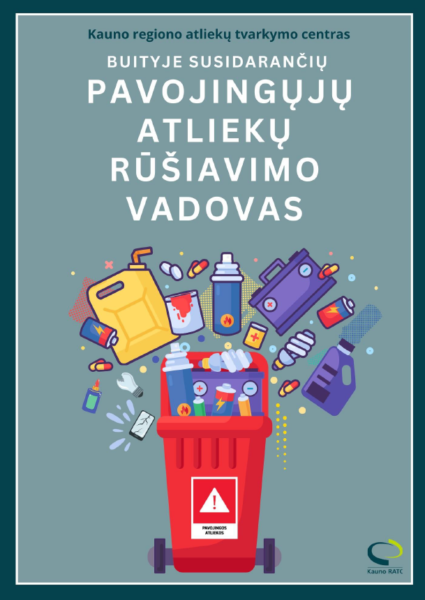
Prepared by Kaunas RATC “Guide to the sorting of household hazardous waste“ has become a handy tool for residents looking for concrete answers. The guide is not only a set of general recommendations, but also a practical tool to help in everyday situations when the question arises whether an old paint can, a packet of household cleaner or an aerosol can should be considered hazardous waste.
“We hope that more and more people will take the opportunity to find the answers about hazardous waste sorting in this guide. Mistakes are often made not because of a reluctance to sort, but because of a lack of knowledge about how to do it correctly. That’s why we have structured the information in this publication and presented it clearly – from an explanation of hazard labelling to specific examples of waste that occurs in the household and instructions on how to handle it.” – says L. Virbickas.
Živilė Valaitytė, Public Relations and Education Specialist at Kaunas RATC, adds that direct communication with communities is an equally important part of education. According to her, live education helps to change the entrenched attitudes about waste management in general, and especially when it comes to hazardous waste, where many people believe that so-called “chemistry” should be thrown away in mixed waste.
“During the education sessions, we explain that hazardous waste is a separate type of waste with its own management path, and that it is accepted free of charge from residents at bulky waste sites and cannot be thrown away with mixed waste. For adults, this often means changing old habits, so change is not always easy. Children, on the other hand, are quick to accept this information and make it the rule. This creates the habit of sorting not only hazardous waste but also other types of waste properly from an early age, rather than deciding where to throw it away once the practice is already established.” – Ž. Valaitytė.
For more information on correct segregation of household hazardous waste, please visit the section of Kaunas RATC website “ABC of waste sorting” and the Kaunas RATC social network “Facebook“.