Thousands of tonnes of green waste – garden and garden waste, tree pruning residues, dead flowers or fruit fall – reach the green waste sites of the Kaunas Regional Waste Management Centre (RWMC) every year. What accumulates after urban greenery management and what residents bring from their yards is reborn here in a matter of months, turning
How is green waste turned into compost?
Laurynas Virbickas, Director of Kaunas RATC, stresses that even small amounts of properly composted green waste can make a significant contribution to reducing the negative impact on the environment. “It is worth composting even a small amount of waste – it is a simple but significant step, which not only reduces the total amount of waste, but also helps to enrich the soil with natural substances. For those who are not able to compost on their own, regional green waste composting sites help by collecting, treating and returning the waste back to society as a valuable product.” – says the Director of Kaunas RATC.
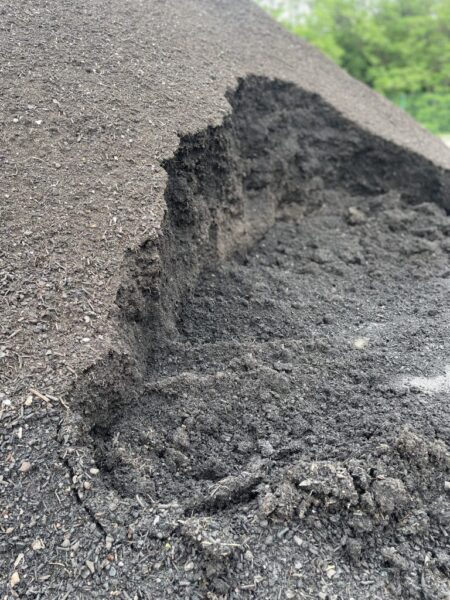
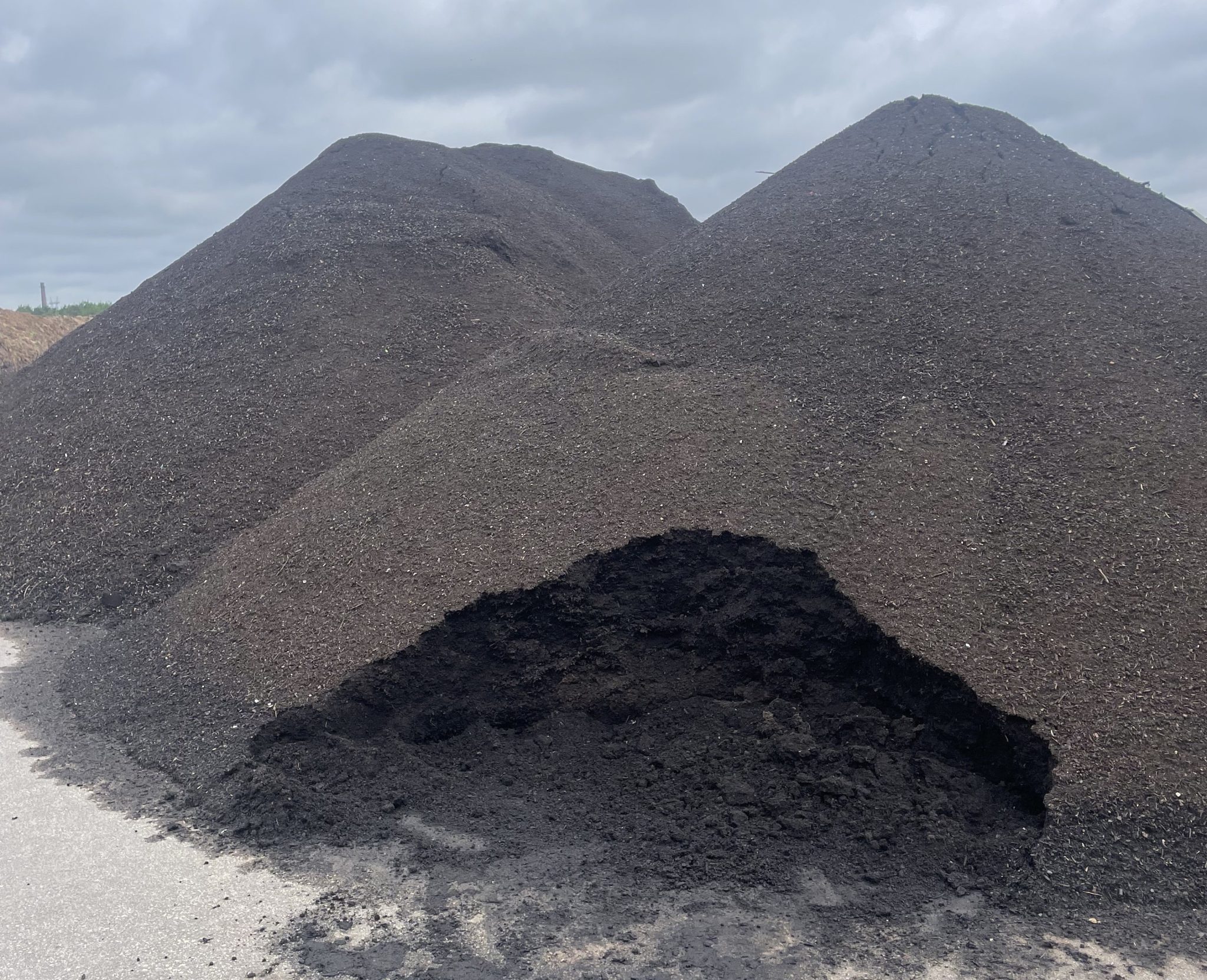
But it takes not only time but also a careful process to make sure that the green waste collected at the site ends up as compost. “Once the waste is piled up, the natural decomposition process begins – the waste spontaneously reaches a temperature of 65-70°C and bacteria multiply inside to break down the organic material.” – says Vygantas Miliūnas, waste reception site engineer at Kaunas RATC. He says that in order to ensure that the process proceeds smoothly and that the bacteria do not run out of oxygen, the waste heaps are used with special equipment. Composting can take about four months.
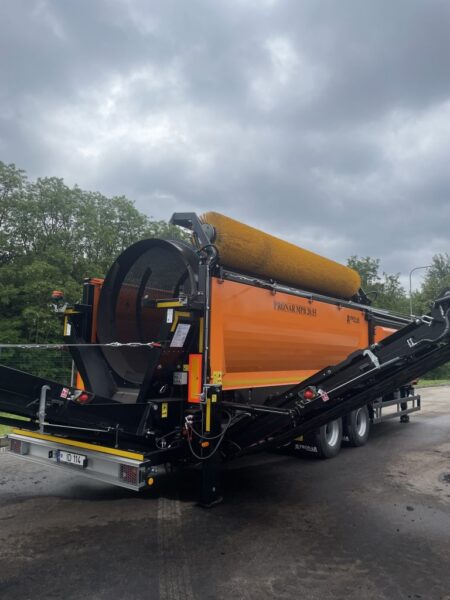
But that’s not the end of the story – compost needs maturing. During this time, it settles, stabilises, excess moisture is reduced and the decomposition of organic matter is complete, explains the engineer. “When the compost is no longer active – no more temperature rise, no more decomposition – then all that’s left to do is to sift it for impurities.” It is at this stage that it is crucial that the green waste is clean from the start – free of plastic or glass impurities, which not only interfere with processing but also reduce the quality of the compost.
More capacity – more compost for residents
According to the data of Kaunas RATC, in recent years the interest of residents and companies in compost produced at green waste sites has been growing steadily. The figures only confirm this – 1700 tonnes will be sold in 2024 and 1000 tonnes by June this year.
“Each batch of compost produced is subjected to specific quality tests and has a very good composition: it is rich in nitrogen, phosphorus, potassium and other trace elements needed by plants. It helps to rebuild the soil structure, improves air permeability or moisture retention, and above all has no side effects.” – says Renata Utyrienė, ecologist at Kaunas RATC.
In order to ensure that there is no shortage of compost for residents’ gardens or the city’s green spaces, Kaunas RATC is strengthening the technical base of the green waste composting sites. “This year we have already purchased a larger and more efficient sifter, which allows us to separate compost from impurities faster and more accurately. In the near future, a new gate separator and shredder are also planned, which will not only speed up the processing of the waste and increase productivity, but also ensure that there is enough quality compost to meet the ever-growing demand for it. – Laurynas Virbickas, Director of Kaunas RATC, shares his views on the changes in the green waste composting sites.
Compost for residents and businesses: what you need to know before arriving at the site
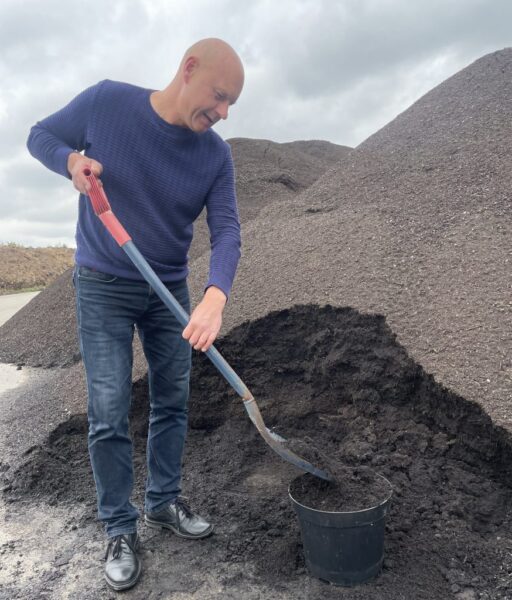
It is good news that compost produced at the Kaunas RATC green waste site is available to both residents and businesses. Each resident can buy up to 25 tonnes of compost per year. The price per tonne isEUR 12 excluding VAT, but payment at the green waste composting site in Kaunas can only be made with a bank card, while in Kėdainiai district (Zabieliškis village) it can also be made in cash. Businesses can buy compost by participating in special auctions for compost sales organised by Kaunas RATC.
Compost is sold loose, so you can load it yourself with the right transport and trailer. However, it is advisable to
For more information visit the Kaunas Regional Waste Management Centre website: https://www.kaunoratc.lt/kompostas/
Kaunas RATC green waste composting sites:
Address: Nemajūnų 15A , Kaunas Liepų g. 16, Zabieliškis, Kėdainiai r.
Tel. No. +370 683 03786 Tel. no. +370 682 55785
Opening hours:
I: 9-18; I-VII: 8-20
II-V: 9-19;
VI: 9-16;
Lunch break: 13-1345
VII: closed